
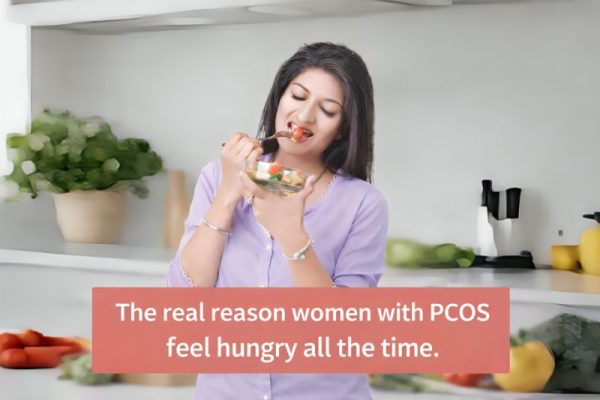
Why “Eat Less” Is the Worst Advice for Women with PCOS
One of the most frustrating things women with PCOS hear is simple advice like: “Just eat less.”
But for many women living with Polycystic Ovary Syndrome (PCOS), hunger is not just about habits or discipline. It’s deeply connected to how their hormones and metabolism function.
If you often feel hungry soon after eating or struggle with constant cravings, there may be a biological reason behind it.
The Hormone That Controls Fullness
Your body has a hormone called leptin.
Leptin plays a very important role in appetite regulation. Its main job is to signal the brain that you’ve had enough food. In simple terms, leptin acts like your body’s natural “stop eating” button.
When leptin levels rise after a meal, your brain receives the signal that you are full, and hunger naturally decreases.
But in many women with PCOS, this system doesn’t function as smoothly as it should.
What Happens in PCOS
Due to hormonal imbalances and metabolic changes associated with PCOS, the body may develop something called leptin resistance.
Leptin resistance means the brain doesn’t respond properly to the fullness signals sent by leptin.
So even if the body has eaten enough food, the brain may still behave as if it hasn’t.
As a result, many women with PCOS experience:
-
Constant hunger
-
Frequent cravings
-
Difficulty controlling portion sizes
-
Unexplained weight gain from overeating
This can make it feel like you’re constantly fighting your appetite, even when you’re trying to make healthier choices.
Why “Eat Less” Doesn’t Work
When someone already struggles with hormonal signals that regulate hunger, simply telling them to “eat less” ignores the underlying biological issue.
PCOS management requires addressing the hormonal and metabolic root causes, not just reducing calories.
What Actually Helps
Instead of focusing only on eating less, the goal should be to support the body’s hormonal balance. This includes:
-
Eating balanced meals with protein, fiber, and healthy fats
-
Choosing foods that stabilize blood sugar levels
-
Avoiding long gaps between meals that trigger cravings
-
Supporting metabolism through consistent nutrition
When the body receives the right nutrients and blood sugar becomes more stable, hunger signals often start to regulate more naturally.
The Real Takeaway
If you have PCOS and feel hungry all the time, it’s not a failure of willpower. It’s your body responding to hormonal signals that are out of balance.
With the right nutritional approach and support, those signals can improve—and eating can start to feel more natural rather than a daily struggle.
P.S. If you know someone with PCOS who constantly blames themselves for being “always hungry,” share this with them. Understanding the science behind it can be incredibly empowering.