
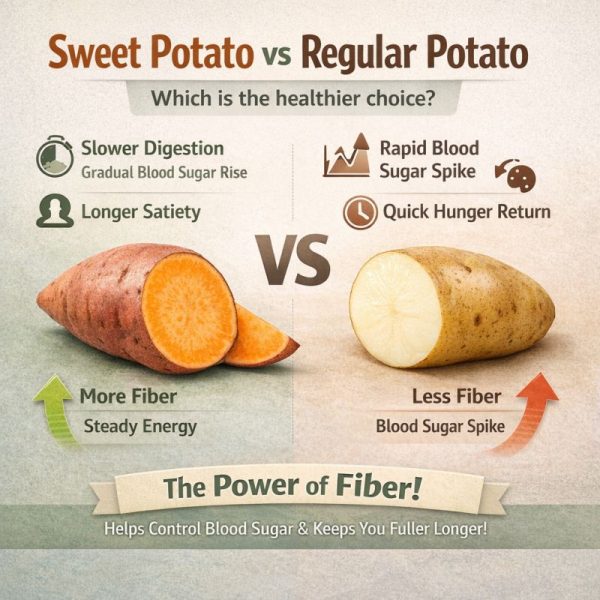
Most people assume that if regular potatoes are “unhealthy,” sweet potatoes must be worse. But that’s not true. In fact, sweet potatoes are often a smarter choice for your body—and here’s why.
Regular Potato: Quick Energy, Short Satisfaction
A regular potato is mostly starch. When you eat it, that starch breaks down rapidly into glucose. This leads to a quick spike in blood sugar, a short-lived feeling of fullness, and hunger that comes back sooner than you’d like.
Sweet Potato: Starch + Fiber = Smarter Fuel
Sweet potatoes contain both starch and fiber. That extra fiber makes a big difference in how your body processes carbohydrates.
1️⃣ Slower Digestion
Fiber slows the conversion of starch into glucose. Instead of a sudden spike in blood sugar, you experience a gradual, steady rise.
2️⃣ Better Glycemic Response
Sweet potatoes generally have a lower glycemic index than regular potatoes, helping your body maintain stable blood sugar levels.
3️⃣ Greater Satiety
Fiber adds bulk and slows digestion, keeping you fuller for longer and helping manage appetite naturally.
The Takeaway
The lesson here isn’t simply “choose sweet potato over regular potato.” It’s about understanding the power of fiber. Foods naturally higher in fiber tend to keep you satisfied longer, whether it’s grains, fruits, vegetables, or legumes.
Sometimes nutrition isn’t about cutting foods out—it’s about choosing the version that works best for your body.
P.S. What about you—do you usually go for sweet potatoes or regular potatoes?