
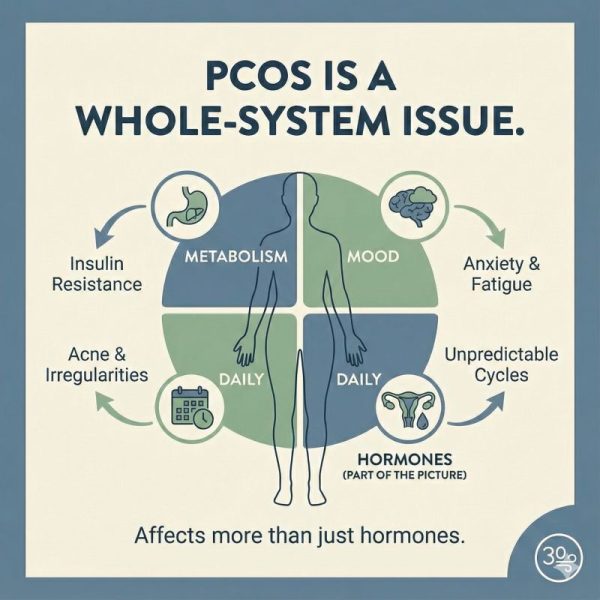
For the love of god, let’s stop calling PCOS “just a hormonal issue.”
Because it’s not.
PCOS is everywhere today. And when something becomes common, people start mistaking it for normal.
But common does not mean harmless.
Polycystic Ovary Syndrome affects far more than hormones. It impacts a woman’s metabolism, mental health, emotions, and daily quality of life—often in ways that go unseen and unheard.
PCOS Is a Full-Body Condition, Not a Single Problem
Reducing PCOS to acne or irregular periods dismisses what women actually experience. The condition disrupts multiple systems in the body at once.
Let’s talk about what that really looks like.
1. Insulin Resistance: The Hidden Driver
Around 70–80% of women with PCOS struggle with insulin resistance—even if they’re not overweight.
When insulin doesn’t work properly, it leads to:
-
stubborn weight gain (especially around the belly)
-
intense cravings and energy crashes
-
chronic inflammation
-
fatigue and increased diabetes risk
This is why many women with PCOS gain weight despite eating “normally” or struggle to lose it despite trying everything.
It’s not lack of discipline.
It’s a metabolic imbalance.
2. The Emotional & Mental Toll of PCOS
PCOS doesn’t stop at the body—it deeply affects the mind.
Research shows women with PCOS are up to 3 times more likely to experience:
-
anxiety and irritability
-
mood swings or low mood
-
mental fatigue and burnout
This isn’t because they’re “overreacting” or “too sensitive.”
When hormones, blood sugar, and inflammation are constantly out of balance, mental health naturally suffers.
PCOS is exhausting—physically and emotionally.
3. How PCOS Shows Up in Daily Life
PCOS often looks like:
-
sudden acne flare-ups
-
bloating from foods that never caused issues before
-
delayed, missed, or unpredictable periods
-
weight gain despite unchanged eating habits
These symptoms affect confidence, relationships, productivity, and self-esteem—every single day.
Yet most people only see the surface.
4. Why PCOS Is Still Treated Casually
Despite its complexity:
-
PCOS is often reduced to acne and periods
-
the same medications are prescribed repeatedly
-
women are told to “just lose weight” or “stop stressing”
Very rarely is the root cause addressed.
PCOS affects the entire system, not one organ.
And it deserves care that looks at the whole picture—nutrition, metabolism, stress, lifestyle, and mental health.
If You’re Living With PCOS, Hear This
None of this is your fault.
Your symptoms are real.
Your struggle is valid.
And your body is not broken—it’s asking for better support.
PCOS is not “just hormones.”
It’s a condition that deserves understanding, compassion, and individualized care. 🌿