
Every few months, a new “perfect morning routine” takes over social media.
Drink lemon water.
Eat soaked almonds.
Have black coffee before the gym.
Take apple cider vinegar.
And slowly, these habits stop being choices.
They become rules.
Recently, I came across a LinkedIn post where someone mentioned they always eat almonds before working out.
And it reminded me of something important:
Most health routines are followed without understanding what the body is actually trying to do at different times of the day.
Your morning is not just one block of time.
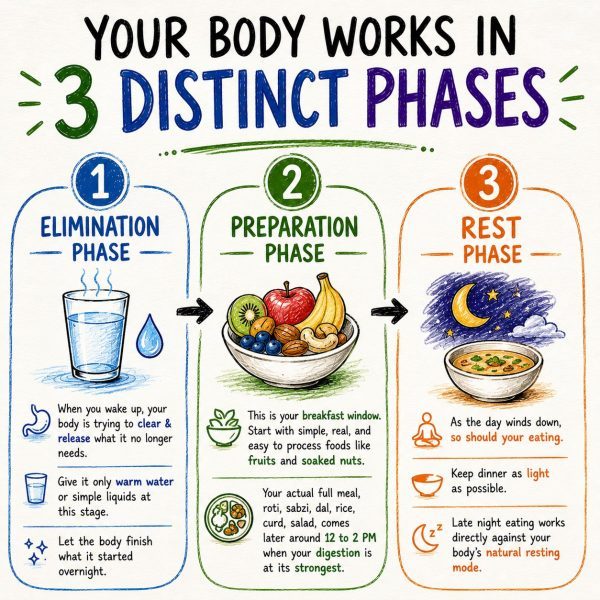
It naturally moves through 3 distinct phases.
But most routines ignore all of them.
1️⃣ The Elimination Phase
When you wake up, your body is already in a cleansing mode.
Throughout the night, your body has been repairing tissues, processing waste, regulating hormones, and preparing to eliminate what it no longer needs.
That’s why mornings naturally involve:
- Bowel movement
- Sweating
- Urination
- Detoxification processes
This phase is not meant for heavy eating immediately after waking up.
Instead, give your body support with:
- Warm water
- Plain water
- Herbal infusions
- Light liquids
The idea is simple:
Allow the body to complete its overnight cleansing process before overloading digestion.
Yet many people immediately begin their day with:
- Heavy breakfasts
- Fried foods
- Excess caffeine
- Protein shakes
- Pre-workout supplements
And then wonder why they feel bloated, sluggish, or uncomfortable later.
Sometimes health is not about adding more.
It’s about interrupting the body less.
2️⃣ The Preparation Phase
Once the body completes elimination, it naturally shifts toward preparing for activity and nourishment.
This is where your first foods of the day matter.
Instead of jumping into very heavy meals, start with foods that are:
- Simple
- Real
- Hydrating
- Easy to process
Examples include:
- Fruits
- Soaked nuts
- Light traditional breakfasts
- Fresh curd
- Coconut water
Your digestive strength gradually builds through the day.
This is why many traditional systems of eating naturally placed the heaviest meals around midday.
Between 12 PM to 2 PM, digestion tends to be strongest for most people.
That’s the ideal window for your proper balanced meal:
- Roti
- Dal
- Sabzi
- Rice
- Curd
- Salad
But modern schedules often reverse this completely:
- Very heavy breakfast
- Random snacking through the day
- Massive late-night dinners
And eventually, the body struggles to keep up.
3️⃣ The Rest Phase
As the sun sets, your body slowly starts preparing for recovery and repair again.
Energy demands reduce.
Digestion naturally slows down.
But this is exactly when most people eat their largest meal.
Late dinners, overeating, desserts, and midnight snacking force the digestive system to stay active when the body is trying to rest.
Over time, this can affect:
- Sleep quality
- Energy levels
- Digestion
- Hunger signals
- Recovery
A lighter dinner supports the body’s natural resting rhythm.
Simple meals in the evening often feel better than complicated heavy ones.
Because health is deeply connected to timing, not just calories.
So… Do You Really Need Almonds Before a Workout?
Not necessarily.
A lot of pre-workout rituals are heavily psychological.
If someone has conditioned themselves to believe they need almonds, coffee, or a banana before training, the body adapts to that expectation.
And if another person trains perfectly well without any of it, that’s also possible.
The important thing is understanding the difference between:
- Biological need
and - Conditioned habit
Many routines work because of consistency and belief, not because they are universally necessary.
That’s why copying someone else’s ritual blindly rarely works long term.
Health Is Not About Rigid Rituals
The wellness industry often turns habits into universal truths.
But the body is not a machine that responds identically for everyone.
Real health is less about following trendy rituals
and more about understanding:
- Timing
- Digestion
- Energy rhythms
- Recovery
- Consistency
The goal is not to create fear around food or routines.
The goal is to build awareness.
Because when your habits align with how your body naturally functions, health becomes simpler, calmer, and far more sustainable. 🌿