
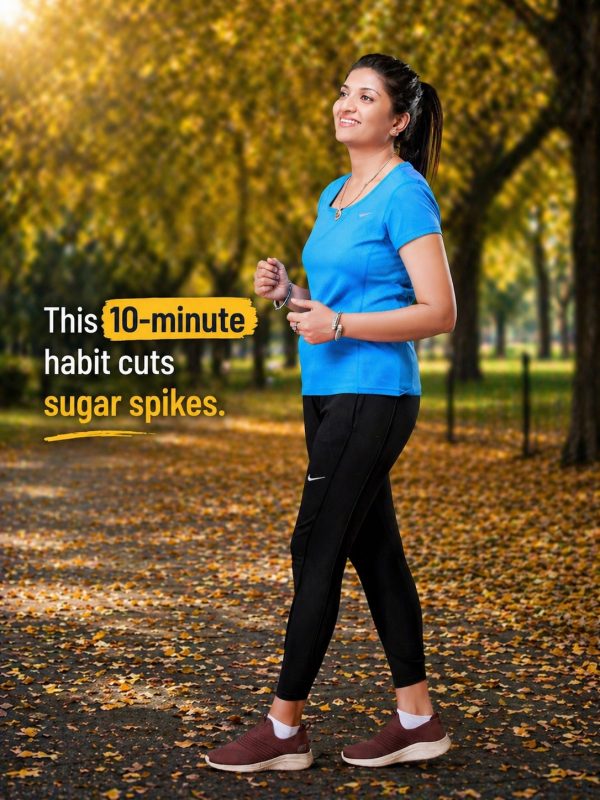
The 10-Minute Habit That Can Change Your Blood Sugar Levels
Most people believe that managing blood sugar is only about what you eat.
But what you do after eating matters just as much—sometimes even more.
Let’s understand this with a simple example.
Two People, Same Meal—Different Outcomes
Imagine two people—Person A and Person B.
They eat the exact same meal.
- Person A sits down at their desk for the next hour.
- Person B goes for a 10-minute walk.
Now here’s where things start to differ.
What Happens Inside the Body
After eating, blood glucose levels naturally rise. This happens to both individuals.
But in Person A’s case, since there is no movement:
- Glucose stays longer in the bloodstream
- The body releases more insulin
- This can lead to energy crashes and increased fat storage over time
Person B, on the other hand, moves.
Even a short walk activates the muscles, which:
- Pull glucose directly from the bloodstream
- Use it as immediate fuel
- Reduce the overall spike in blood sugar
The result?
Lower glucose spike, reduced insulin response, and more stable energy levels.
Why This Matters Over Time
This is not just about one meal.
When you consistently add light movement after eating, your body begins to respond differently.
Over time, this simple habit can:
- Reduce unnecessary cravings
- Lower fat storage
- Improve energy stability throughout the day
- Enhance insulin sensitivity
You Don’t Need Extreme Changes
This isn’t about intense workouts or strict diets.
You don’t need:
- A gym session
- A complicated routine
- Or a drastic lifestyle change
All it takes is:
10 minutes of walking after meals—especially lunch and dinner.
The Bigger Picture
Blood sugar control isn’t just about food choices.
It’s about how your body processes that food—and movement plays a crucial role in that process.
The 30 minutes after eating are more powerful than most people realise.
Try This for One Week
Commit to a simple experiment:
- Walk for 10 minutes after each meal
- Notice your energy levels
- Observe your cravings
- Pay attention to your mood
You may be surprised by how quickly your body responds.
Because sometimes, the smallest habits create the biggest changes.