
Before You Switch to Yeast-Fermented Protein, Read This
Protein trends keep evolving.
First, it was plant protein.
Then whey protein became the gold standard.
And now, a new entrant is gaining attention — yeast-fermented protein.
You’ll find it in supplements, protein powders, and even in the form of nutritional yeast sprinkled over everyday meals.
Naturally, people are curious.
But before you add it to your routine, it’s important to understand what it really is—and whether you actually need it.
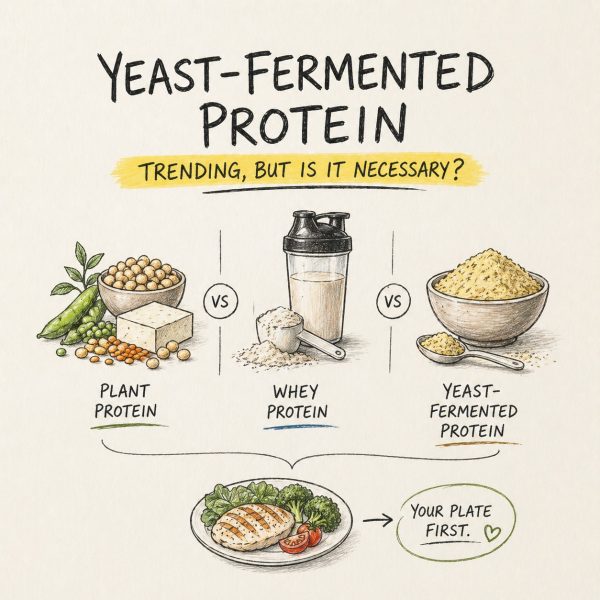
The Three Types of Protein We’re Talking About
Broadly, most conversations around protein revolve around three types:
- Plant protein
- Whey protein
- Yeast-fermented protein
The newest among them—yeast protein—is being marketed as a modern, cleaner alternative.
But is it really?
What Is Yeast-Fermented Protein?
Yeast-fermented protein is produced by fermenting yeast to create a protein-rich product.
One of its key highlights is that it is a complete protein, meaning it contains all essential amino acids your body needs.
Many people also find it:
- Easier to digest
- Gentler on the gut
- Suitable for those who avoid dairy
On paper, it sounds like a great option.
But Here’s What Most People Miss
All three forms—plant protein powders, whey protein, and yeast protein—have one thing in common:
They are extracted forms of nutrition.
And this is where things get important.
When we extract and isolate nutrients from their natural state, we are changing how they function inside the body.
Why Extraction Changes Everything
Think about simple examples:
- Separating egg yolk from egg white
- Extracting juice from whole fruit
Even these basic processes alter how nutrients behave.
Now imagine what happens when protein is processed, refined, and converted into powders.
The structure changes.
The absorption pattern changes.
And sometimes, even the impact on your body changes.
This doesn’t automatically make them harmful—but it does mean they are not the same as whole foods.
So, Do You Really Need Protein Supplements?
This is the question that matters most.
For most people, the answer is simple:
Probably not.
If your daily meals already include a balanced mix of:
- Pulses and legumes
- Dairy (if you consume it)
- Nuts and seeds
- Whole grains
…your protein intake is likely already sufficient.
Supplements are not meant to replace food.
They exist to fill gaps when real food cannot.
When Do Supplements Make Sense?
There are specific situations where protein supplementation can be useful:
- Higher protein requirements (athletes, intense training)
- Recovery after illness
- Restricted diets where intake is inadequate
- Medical or clinical needs
Outside of these cases, using protein powders daily “just because” may not be necessary.
The Bottom Line
Yeast-fermented protein is not magic.
It’s simply another option in the growing list of protein supplements.
Yes, it may work well for some people.
Yes, it may be easier to digest for others.
But it doesn’t replace the foundation of good nutrition:
Real, whole, balanced meals.
Final Thought
Before choosing any protein supplement, ask yourself one simple question:
Is this based on my requirement… or just a recommendation I heard somewhere?
Because your body doesn’t need trends.
It needs what’s right for you.