
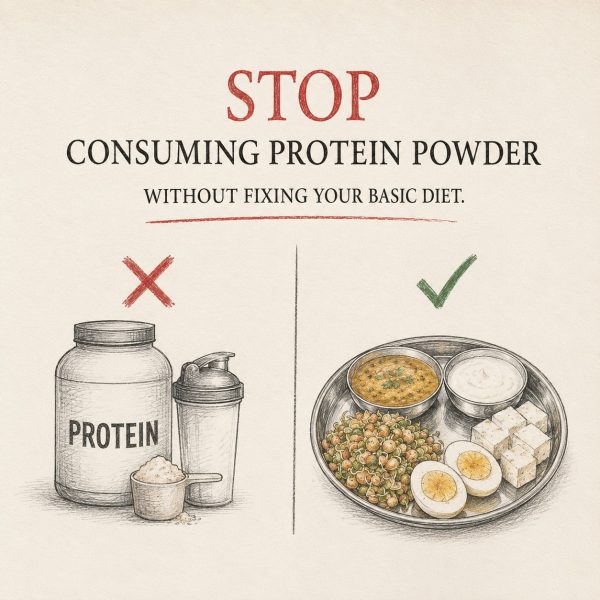
STOP Depending Only on Protein Powder to Fix Your Diet
Walk into any gym or scroll through fitness content online, and you’ll hear one thing repeatedly:
“Take more protein.”
And while that advice is not wrong, the way most people apply it is.
Today, protein powder has become the first solution people reach for when trying to lose weight, build muscle, improve fitness, or become healthier.
But here’s the reality:
A scoop of protein powder cannot fix a poorly structured diet.
That is exactly where most people go wrong.
India Has a Serious Protein Deficiency Problem
Studies suggest that nearly 73% of Indians are protein deficient.
Even more concerning?
Most people do not know how much protein they actually need in a day.
So naturally, when fitness culture started emphasizing protein intake, people rushed to buy supplements without first fixing the quality of their meals.
The result?
People consume protein shakes daily but still struggle with:
- Low energy
- Poor recovery
- Weak muscle growth
- Constant cravings
- Hair fall
- Slow metabolism
- Difficulty losing fat
Because protein intake is not just about adding a supplement.
It is about building meals correctly.
The First Problem: Most Indian Meals Are Carb-Heavy
A large part of the Indian diet is centered around cereals and carbohydrates.
Meals are often dominated by:
- Roti
- Rice
- Poha
- Upma
- Paratha
- Namkeen snacks
These foods provide energy and fullness, but they are not high-quality protein sources.
So if someone eats low-protein meals throughout the day and then adds one scoop of protein powder at night, the body still spends most of the day undernourished in terms of protein quality.
That single scoop cannot compensate for an entire day of imbalanced eating.
The Second Problem: Protein Does Not Work Alone
This is the part most people completely ignore.
Your body cannot efficiently utilize protein without the support of key micronutrients.
Nutrients like:
- Zinc
- Magnesium
- Vitamin B6
- Iron
- Vitamin D
all play important roles in protein metabolism, muscle repair, hormone balance, and recovery.
This means:
You can consume enough protein on paper and still not see proper results if your diet lacks nutrient diversity.
That is why people sometimes say:
“I am taking protein regularly but nothing is changing.”
The issue is often not the supplement.
It is the foundation diet.
The Real Solution Is Simpler Than You Think
Instead of depending entirely on powders, focus on improving every meal.
A practical approach is:
Aim for 25% Protein in Every Meal
Try balancing your plate with both plant and animal protein sources.
Plant-Based Protein Sources
Include foods like:
- Dal
- Channa
- Rajma
- Sprouts
- Soy
- Peanuts
Animal-Based Protein Sources
Add foods such as:
- Eggs
- Milk
- Curd
- Paneer
- Chicken
- Fish
Combining different protein sources improves amino acid quality and overall nutrition.
Small improvements repeated daily work far better than relying on one supplement.
So, Should You Stop Protein Powder Completely?
Not at all.
Protein supplements absolutely have their place.
They can be useful for:
- Busy schedules
- Post-workout recovery
- Travel days
- Higher athletic requirements
- People struggling to meet protein targets through food alone
But supplements should support your diet — not become the foundation of it.
Think of protein powder as a convenience tool, not a replacement for real meals.
Final Thoughts
Protein deficiency is real, especially in India.
But solving it requires more than buying a tub of protein powder.
The real transformation happens when you:
- Improve meal quality
- Balance protein intake across the day
- Include micronutrient-rich foods
- Build sustainable eating habits
Fix your meals first.
Everything else becomes easier after that. 🌿