
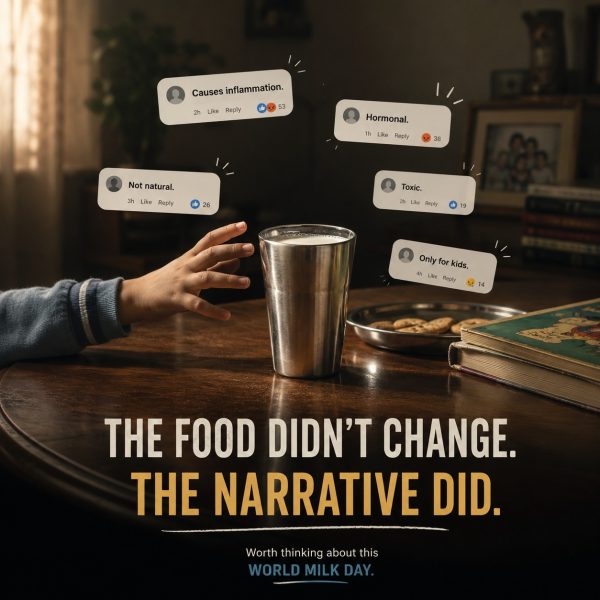
Over the last few years, milk has become one of the most debated foods on the internet.
One day it’s being praised as a complete source of nutrition. The next day, it’s being blamed for everything from hormonal imbalances to inflammation and weight gain.
Social media is full of claims such as:
- “Milk affects hormones.”
- “Milk is only meant for children.”
- “Plant-based alternatives are healthier.”
- “Adults don’t need dairy.”
But nutrition is rarely that simple.
The truth is that milk may not be suitable for everyone, but that doesn’t automatically make it unhealthy for everyone.
Not Everyone Needs to Avoid Milk
Some individuals are lactose intolerant, meaning they have difficulty digesting lactose, the natural sugar found in milk. For these individuals, consuming milk may cause bloating, discomfort, or digestive issues.
However, lactose intolerance is not a reason for the entire population to eliminate milk from their diet.
Nutrition recommendations should be personalized, not generalized based on isolated experiences or viral trends.
Milk Is One of the Few Vegetarian Sources of Complete Protein
One of milk’s greatest nutritional advantages is its protein quality.
Milk contains all nine essential amino acids, making it a complete protein. These amino acids are necessary for muscle maintenance, growth, tissue repair, immunity, and overall health.
For vegetarians, finding high-quality complete protein sources can often be challenging. Milk and dairy products help bridge that gap by providing a nutrient-dense source of protein that is easily absorbed and utilized by the body.
Why Milk Matters During Critical Life Stages
The importance of milk becomes even more significant during stages when nutritional demands increase.
Children
Children require adequate protein, calcium, and other nutrients to support growth, bone development, and overall health. Milk can contribute significantly to meeting these requirements.
Pregnancy
During pregnancy, the body’s demand for nutrients increases substantially. Protein, calcium, and vitamin B12 become particularly important for both maternal health and fetal development.
Older Adults (60+ Years)
As we age, muscle mass naturally declines, and bone health becomes a major concern. The high-quality protein and calcium found in milk can help support healthy aging.
Women During Menopause
Hormonal changes during menopause can increase the risk of bone loss and nutritional deficiencies. Dairy products can play a valuable role in maintaining bone strength and overall nutritional status.
The Vitamin B12 Connection
Vitamin B12 is an essential nutrient involved in nerve function, red blood cell formation, and energy metabolism.
Since vitamin B12 is naturally found primarily in animal-derived foods, vegetarians often have limited dietary sources.
For many vegetarian individuals, milk and dairy products remain one of the most accessible and practical ways to obtain vitamin B12 as part of a balanced diet.
Social Media Trends vs. Scientific Evidence
Food trends come and go.
One year a food is considered a superfood. The next year it’s labelled harmful.
Unfortunately, nutrition discussions on social media often lack context. A food may be unsuitable for a specific group of people, but that doesn’t mean it should be universally avoided.
The question shouldn’t be, “Is milk good or bad?”
The better question is, “Is milk appropriate for my health needs, lifestyle, and nutritional requirements?”
Evidence-based nutrition focuses on individual needs, overall dietary patterns, and long-term health outcomes rather than fear-driven food narratives.
The Bottom Line
Milk is not a mandatory food, nor is it a harmful food that everyone should avoid.
For those who tolerate it well, milk can be a valuable source of complete protein, calcium, vitamin B12, and several other essential nutrients.
This World Milk Day, it’s worth remembering that nutrition should be guided by scientific evidence, individual health needs, and practical dietary habits—not by viral social media claims.
Before eliminating any food group, ask whether the decision is being driven by evidence or by trends.
Because good nutrition is built on knowledge, not fear.