
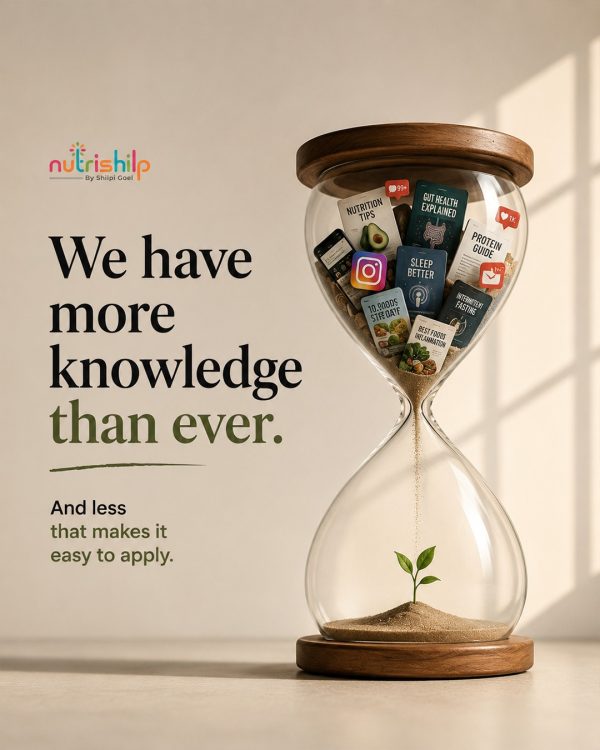
Open any social media platform today and you’ll find endless advice on nutrition, gut health, metabolism, hormones, fasting, protein, sleep, and exercise.
Never before has health information been so accessible.
Ironically, never before have so many people struggled with obesity, diabetes, fatty liver, PCOS, chronic stress, poor sleep, and other lifestyle-related conditions.
It raises an important question:
If we know so much about health, why are we becoming less healthy?
The answer isn’t that people don’t care.
Most people genuinely want to feel better. They want more energy, better digestion, sustainable weight management, and long-term wellness.
The real challenge is that knowledge alone doesn’t create healthy habits.
1. Information Overload Creates Confusion
The internet has made expert advice available to everyone—but it has also made misinformation just as accessible.
One expert recommends eating every two hours.
Another says intermittent fasting is the answer.
One promotes low-carb diets.
Another advocates high-carb whole-food nutrition.
Protein becomes the focus one week. Detoxes trend the next.
For someone trying to improve their health, this constant stream of conflicting advice often creates confusion rather than clarity.
Instead of taking small, consistent steps, many people postpone action because they aren’t sure which advice is correct.
When everything feels important, nothing gets implemented.
2. Modern Life Keeps Us Sitting
Technology has transformed how we work, communicate, shop, and entertain ourselves.
While these changes have made life more convenient, they’ve also dramatically reduced our daily movement.
Hours are spent sitting in front of laptops.
Evenings disappear scrolling through phones.
Entertainment, shopping, banking, and social interaction now happen without leaving the couch.
Our bodies were designed for movement, but our lifestyles increasingly encourage inactivity.
Regular exercise cannot fully compensate for spending the rest of the day sedentary.
Movement throughout the day matters just as much.
3. Our Environment Makes Healthy Choices Harder
Healthy habits don’t exist in isolation.
They are shaped by the environment around us.
Today’s environment often works against good health:
- Busy schedules leave little time for cooking.
- Chronic stress increases cravings and emotional eating.
- Late nights disrupt hunger hormones and recovery.
- Ultra-processed convenience foods are available everywhere.
- Social gatherings frequently revolve around calorie-dense foods.
None of these factors mean people lack discipline.
They simply make consistency much more difficult.
The healthier choice often requires more planning, more effort, and more time than the less healthy one.
Awareness Is Only the Beginning
Knowing what to eat isn’t the same as eating well.
Understanding the importance of exercise doesn’t automatically create time for movement.
Reading about sleep doesn’t guarantee eight hours of rest.
Awareness is valuable because it starts the conversation.
But sustainable health comes from creating routines and environments that make healthy choices easier—not harder.
Build an Environment That Supports Your Health
Instead of relying on motivation every day, make healthy habits the default.
Simple changes can have a lasting impact:
- Keep nutritious foods visible and easy to access.
- Schedule movement into your calendar like any important meeting.
- Set boundaries around screen time before bed.
- Prepare meals ahead when your week gets busy.
- Prioritize consistent sleep over occasional perfection.
- Focus on one habit at a time instead of changing everything overnight.
These small actions, repeated consistently, create meaningful long-term results.
Final Thoughts
Our generation isn’t lacking awareness.
If anything, we have more access to health knowledge than any generation before us.
What we’re missing is an environment that supports consistent action.
Real health isn’t built by consuming more content.
It’s built by making everyday choices that become sustainable habits over time.
Because lasting wellness isn’t about knowing more.
It’s about making healthy choices easier to practice every single day.