
I’ve Been Fasting for Months but Not Losing Weight? Here’s Why.
“I’ve been fasting for months. Why am I still not losing weight?”
If you’ve ever asked yourself this question, you’re not alone.
Many people believe that simply eating less or skipping meals will automatically lead to weight loss. But the truth is, fasting doesn’t work the way most people think it does.
In many cases, people aren’t actually fasting—they’re restricting food in a way that leaves the body stressed, undernourished, and more likely to hold onto weight.
Let’s understand why.
Fasting vs. Food Restriction: They’re Not the Same
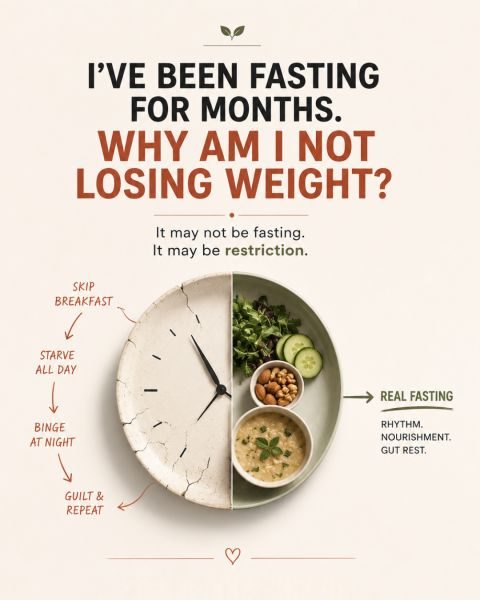
A common pattern looks something like this:
- Skip breakfast
- Eat very little throughout the day
- Feel extremely hungry by evening
- Overeat at dinner
- Feel guilty the next morning
- Repeat the cycle
This isn’t fasting.
It’s a cycle of deprivation followed by overeating.
When your body experiences repeated restriction, it adapts by conserving energy, increasing hunger hormones, and making it harder to maintain healthy eating habits.
As a result, weight loss often slows down instead of speeding up.
The Real Purpose of Fasting
Traditionally, fasting wasn’t created as a weight-loss strategy.
In Indian culture, fasting has long been associated with spirituality, discipline, mindfulness, and giving the digestive system a temporary break.
Weight management was only a possible side benefit—not the primary goal.
Today, fasting is often promoted solely as a quick solution for weight loss, leading many people to follow extreme or inconsistent fasting schedules that may not support long-term health.
Why You May Not Be Losing Weight While Fasting
1. You’re Overeating After the Fast
Going many hours without food often leads to intense hunger.
This can result in consuming more calories than your body actually needs once the fasting window ends.
2. Your Meals Lack Nutrition
Skipping meals doesn’t automatically create a healthy eating pattern.
If your meals are low in protein, fibre, vitamins, and healthy fats, your body may struggle with satiety, energy levels, and metabolic health.
3. You’re Fasting for Too Long
Long or frequent fasting isn’t always better.
Extended fasting without proper planning can leave you tired, increase cravings, and make consistency difficult.
4. Your Lifestyle Doesn’t Support Weight Loss
Fasting alone cannot compensate for:
- Poor sleep
- High stress levels
- Frequent processed foods
- Lack of physical activity
- Irregular eating habits
Weight management is influenced by your overall lifestyle—not just your eating window.
How to Fast the Right Way
1. Follow Time-Restricted Eating
Instead of starving yourself all day, aim to:
- Eat your meals within an 8–10 hour window
- Fast overnight for 14–16 hours, if it suits your health and lifestyle
This approach provides digestive rest without excessive restriction.
2. Choose Light, Nourishing Foods
If you’re fasting for religious or cultural reasons, include foods that provide nourishment, such as:
- Fresh fruits
- Nuts and seeds
- Homemade khichdi
- Yogurt (if appropriate)
- Coconut water
- Plenty of water to stay hydrated
The goal is nourishment—not deprivation.
3. Break Your Fast Gently
Avoid jumping straight into a large, heavy meal.
Instead:
- Start with something light
- Eat slowly
- Allow your digestive system to adjust before having a complete meal
This can improve digestion and help prevent overeating.
4. Keep Fasting Periodic
Fasting works best when it’s part of a balanced lifestyle.
For many people, fasting occasionally—such as once a week or during religious observances—is more sustainable than treating it as a daily weight-loss tool.
Consistency matters far more than extremes.
Is Fasting Enough for Weight Loss?
Not necessarily.
Sustainable weight loss depends on several factors working together:
- Balanced nutrition
- Adequate protein intake
- Regular physical activity
- Quality sleep
- Stress management
- Healthy eating habits
- Appropriate calorie intake
Fasting can be one tool—but it isn’t a magic solution.
Final Thoughts
If you’ve been fasting for months and still aren’t seeing results, the answer may not be to fast longer or eat less.
Instead, focus on fasting in a way that supports your body’s natural rhythms while meeting your nutritional needs.
Remember:
Fasting isn’t about punishment.
It’s about creating periods of digestive rest while nourishing your body well enough to function, repair, and maintain long-term health.
When combined with balanced nutrition and healthy lifestyle habits, fasting can become a sustainable practice—not just another short-term weight-loss trend.