
Is Jaggery Really Better Than Sugar? The Truth About “Healthy” Sugar Alternatives
One of the most common nutrition myths today is this:
“I stopped eating white sugar. I only use jaggery now, so it’s healthy.”
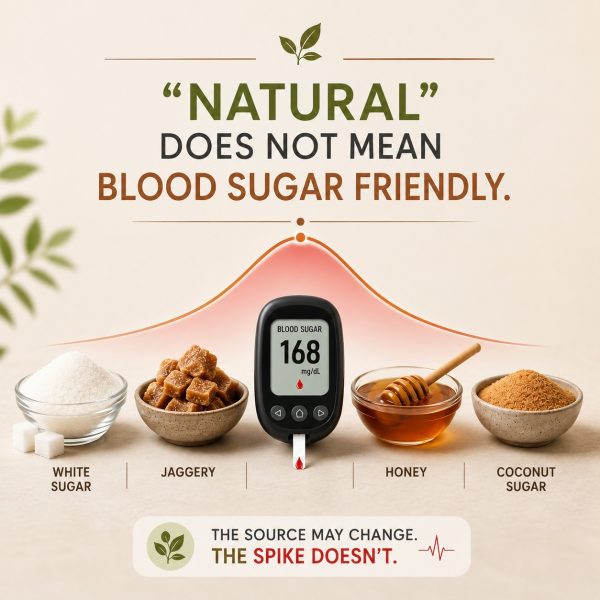
But switching from white sugar to jaggery does not automatically solve a blood sugar problem.
Because at the end of the day, natural sugar is still sugar.
Your body does not process sugar based on how natural, organic, or traditional the label sounds.
It responds to one thing:
How much glucose enters the bloodstream?
And this is where many people unknowingly get trapped.
The “Natural” Sugar Illusion
Today, many sweeteners are marketed as healthier alternatives:
- Jaggery
- Honey
- Coconut sugar
- Khandsari
- Brown sugar
- Date syrup
And yes, some of these may be slightly less processed than refined white sugar.
Some even contain tiny amounts of:
- Iron
- Calcium
- Potassium
- Antioxidants
But nutritionally, they are still concentrated sources of sugar.
Which means they can still:
- Spike blood sugar
- Increase insulin demand
- Trigger cravings
- Contribute to excess calorie intake
Especially when consumed frequently or in large amounts.
The Glycemic Index Surprise
Most people assume jaggery is automatically safer because it feels more “natural.”
But here’s the surprising part:
- Jaggery has a glycemic index of around 84
- White sugar is around 65
This means jaggery can sometimes raise blood sugar even faster than regular sugar.
Similarly, coconut sugar is often promoted as diabetic-friendly.
But it is still largely made of sucrose and can create a blood sugar response very similar to regular sugar.
So while the source changes, the metabolic impact may not change as much as people believe.
Why People Still Overconsume “Healthy” Sugar
The biggest issue is not the ingredient itself.
It is the false sense of safety attached to it.
When something is labeled:
- Organic
- Natural
- Ayurvedic
- Unrefined
- Chemical-free
People automatically assume they can consume more of it without consequences.
And that is where problems begin.
Because blood sugar does not care whether the sugar came from:
- White sugar
- Honey
- Jaggery
- Coconut sugar
Your body still breaks most of it down into glucose.
And excessive glucose still creates stress on the system.
Does This Mean You Should Never Eat Jaggery?
Not necessarily.
Less-processed sweeteners can still be a slightly better choice than heavily refined sugar because they retain small amounts of nutrients.
But “better” does not mean “unlimited.”
For people with:
- Diabetes
- PCOS
- Fatty liver
- Insulin resistance
- Weight management struggles
Portion control still matters just as much.
The goal should not simply be replacing white sugar with another form of sugar.
The goal should be:
- Reducing overall sugar dependence
- Improving meal balance
- Managing blood sugar stability
- Building sustainable eating habits
What Actually Helps Blood Sugar Management?
Instead of obsessing over which sugar is healthiest, focus on habits that truly improve glucose control:
1. Prioritize Protein
Balanced protein intake slows glucose absorption and improves satiety.
2. Increase Fiber
Vegetables, fruits, seeds, and whole foods help stabilize blood sugar.
3. Avoid Frequent Snacking
Constant sugar exposure keeps insulin elevated throughout the day.
4. Watch Liquid Calories
Tea, coffee, packaged drinks, and “healthy” beverages often carry hidden sugars.
5. Reduce Overall Sweetness Dependence
This is the real long-term solution.
Final Thoughts
Less processed sugar is definitely a better option in some ways.
But mindless consumption of “healthy sugar” is still mindless sugar consumption.
The ingredient name changes.
The glucose spike often does not.
Real health is not about finding a magical sugar replacement.
It is about understanding how your body responds to food — and making choices with awareness, balance, and moderation.