
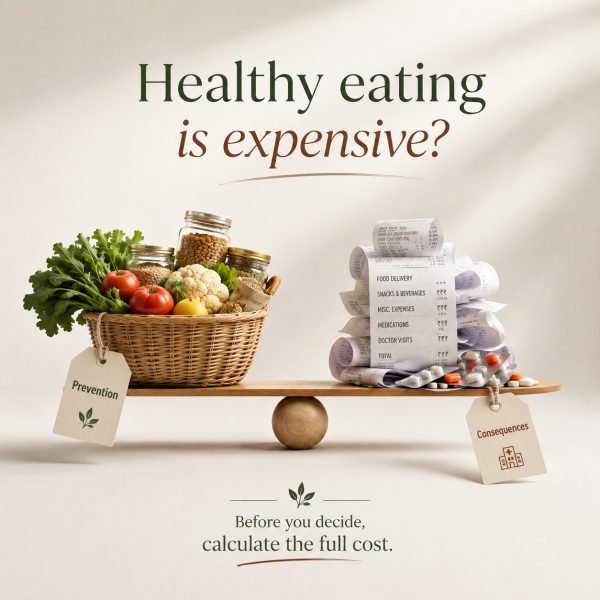
Is Healthy Eating Really Expensive? The Hidden Cost of Unhealthy Habits
“Healthy eating is expensive.”
It’s one of the most common objections people raise when discussing nutrition and lifestyle changes. Many people assume that eating healthy requires expensive supplements, imported superfoods, protein bars, or specialty products.
But is healthy eating actually expensive—or have we simply become accustomed to spending money elsewhere without questioning it?
A Simple Exercise That Changes Perspective
Take a piece of paper and write down the following:
- Last week’s food delivery expenses
- Weekly spending on snacks and beverages
- Miscellaneous impulse food purchases
- Regular medication costs
- Doctor consultation expenses
Now, write down your weekly grocery bill.
Compare the two.
For many people, the combined cost of convenience foods, takeout meals, and health-related expenses is significantly higher than the cost of purchasing nutritious groceries.
This realization often changes the conversation entirely.
Prevention vs. Consequences
The truth is that most people are already spending money on their health.
The only question is:
Are you spending on prevention or on consequences?
Nutritious eating habits help reduce the risk of lifestyle-related health concerns, improve energy levels, support weight management, and contribute to overall well-being.
On the other hand, poor dietary habits often lead to recurring expenses in the form of medications, doctor visits, and treatments that could potentially have been minimized through better lifestyle choices.
Healthy Eating Doesn’t Mean Expensive Superfoods
One of the biggest misconceptions about nutrition is that healthy eating requires premium products.
In reality, some of the healthiest foods have been part of Indian kitchens for generations:
- Dal and legumes
- Seasonal fruits and vegetables
- Millets
- Curd and buttermilk
- Nuts and seeds
- Whole grains
- Homemade meals
These foods are nutrient-dense, affordable, and readily available.
Good nutrition is not about buying the most expensive products. It’s about making consistent, balanced choices with the foods already around us.
Why We Question Prevention More Than Convenience
Interestingly, people rarely question the cost of convenience.
A food delivery bill often feels normal.
Ordering snacks, sugary beverages, or eating out multiple times a week is considered routine.
Yet investing in fresh vegetables, fruits, and quality groceries is often viewed as an unnecessary expense.
This mindset creates a false perception that healthy eating costs more, when in reality, unhealthy convenience often carries a much higher long-term price tag.
Health Reflects Repeated Choices
Health doesn’t evaluate expenses the way we do.
It responds to the choices we repeat consistently.
Every meal, every snack, and every daily habit contributes to our overall well-being. Small decisions made consistently over time create significant results—either positive or negative.
That’s why sustainable health isn’t built through occasional detoxes or expensive supplements. It’s built through everyday habits.
Calculate the Full Cost
Before deciding that healthy eating is unaffordable, take a closer look at your overall spending.
Don’t just calculate the cost of groceries.
Calculate:
- The cost of frequent food delivery
- The cost of unhealthy snacking
- The cost of low energy and poor productivity
- The cost of medications
- The cost of recurring health issues
When viewed from this perspective, healthy eating often turns out to be one of the most valuable investments you can make.
Because in many cases, healthy eating was never the expensive option after all—it was simply the option with the greatest long-term return.
Choose prevention today, and your future self will thank you for it. 🌿