
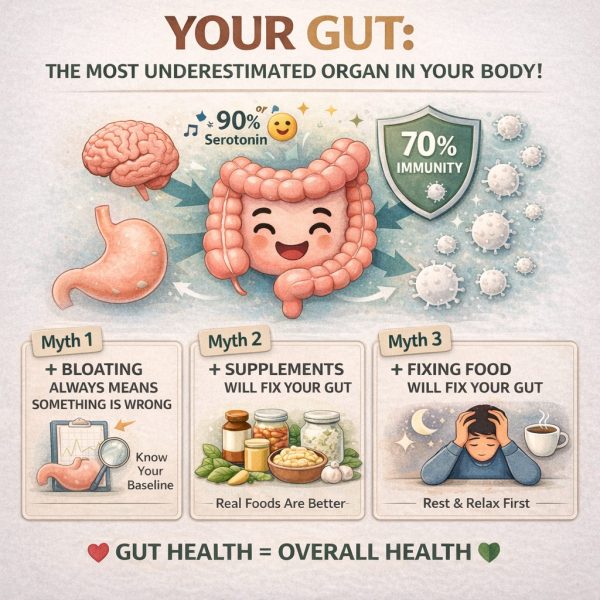
The gut is still one of the most underestimated organs in the human body.
And honestly, it’s surprising.
This single system influences your mood, immunity, digestion, energy levels—and yet most people only think about it when something goes wrong.
What makes it even more fascinating is that your gut produces over 90% of your body’s serotonin—the hormone responsible for regulating mood—and houses nearly 70–80% of your immune system.
In simple terms:
Your gut isn’t just about digestion. It’s the control center of your overall health.
And yet, despite all this, we continue to misunderstand it.
Let’s break down three of the most common myths.
Myth 1: Bloating Means Something Is Wrong
Bloating has become one of the most overanalyzed symptoms today.
The moment someone feels even slight discomfort, the assumption is that something is “off.”
But here’s the truth—not all bloating is a problem.
Your gut naturally expands and contracts throughout the day depending on:
- What you eat
- How fast you eat
- Your hydration levels
- Your hormonal cycle
Instead of reacting immediately, it’s important to understand your personal baseline.
Occasional bloating is normal. Persistent, painful bloating is when you should investigate further.
Myth 2: Supplements Can Fix Your Gut
We’ve been conditioned to believe that a capsule can solve everything.
Probiotics, digestive enzymes, gut cleanses—the market is flooded.
But here’s a simple question:
If your environment already provides fresh, natural gut-supporting foods, why rely on pills?
Traditional foods like:
- Curd
- Buttermilk
- Fermented foods
- Fresh seasonal fruits and vegetables
offer a diverse range of beneficial bacteria and nutrients that no supplement can truly replicate.
Supplements may have their place in specific cases—but they should never replace real food.
Myth 3: Fixing Food Alone Will Fix Your Gut
This is where most people go wrong.
They focus only on diet—cutting foods, adding superfoods, following trends—while completely ignoring lifestyle.
But your gut doesn’t function in isolation.
It is deeply connected to your brain through what’s known as the gut-brain axis.
This means:
- Chronic stress can disrupt gut bacteria
- Poor sleep can weaken digestion
- Emotional imbalance can affect gut lining
So even if your diet is “perfect,”
high stress and low sleep can still damage your gut health.
What Actually Works for a Healthy Gut
If you truly want to support your gut, the approach needs to be simple and sustainable:
- Eat real, whole foods
- Include natural fermented foods regularly
- Prioritize sleep
- Manage stress consciously
- Stay consistent instead of chasing trends
Because gut health isn’t built overnight—and it certainly isn’t built through shortcuts.
Final Thought
Your gut influences almost every system in your body.
It deserves more than guesswork, trends, and quick fixes.
It needs understanding, consistency, and care.
P.S. Which of these myths did you believe until now?